
THE SHORT VERSION
Keep regional staples and improve the full meal combination.
Use sambar, pulses, eggs, dairy, fish or chicken as suitable protein sources.
Pay attention to chutney, oil, sugar and restaurant portions.
Plan around the cuisine you genuinely eat at home.
Idli, dosa and breakfast balance
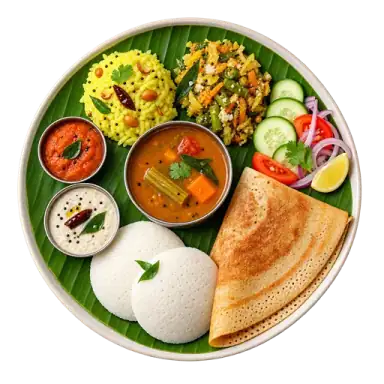
Idli and dosa can fit a structured plan. The number eaten, batter composition, oil used and accompaniments all change the meal. Sambar can add pulses and vegetables; chutneys vary widely in energy density. Adding an egg, curd or another suitable protein source may improve balance for some people.
Other useful breakfasts include vegetable upma, pesarattu, appam with an appropriate accompaniment, ragi dishes and region-specific options. Choose meals you can repeat on working days rather than chasing a long list of special recipes.
Can rice stay in the plan?
Rice can remain part of a weight-management plan. A meal of rice, sambar or dal, poriyal or another vegetable, curd and a suitable protein can be more balanced than rice eaten with several fried or energy-dense sides. Quantity and the rest of the plate matter.
Red rice, brown rice or millets can add variety, but changing the grain does not make portions irrelevant. Use the option you tolerate, enjoy and can prepare consistently. Food quality and overall intake matter more than treating one grain as a shortcut.
Kerala and coastal food choices
A Kerala-style plan can include appam, puttu, rice, avial, thoran and regional fish or chicken dishes. Coconut is part of the cuisine and need not be labelled forbidden, but coconut milk, grated coconut and frying can increase the energy density of a meal. Frequency and amount still count.
Coastal diets may offer fish and varied vegetables, while vegetarian households can use pulses, curd, paneer, tofu or soy foods. There is no need to flatten different South Indian cuisines into one generic chart.
FROM GUIDANCE TO A DAILY PLAN
Get 28 days of meals matched to your choices.
₹499 once · PDF on WhatsApp · No subscription
Making the routine easier to follow
Plan a few reliable weekday meals, decide how restaurant meals will fit, and avoid long gaps that end in an oversized dinner. Coffee or tea sugar, fried evening snacks and frequent tasting can add up even when main meals look balanced.
Any plan should change when health conditions, pregnancy, medication, allergies or a history of disordered eating are relevant. Use general guidance as education, not as medical treatment.
A sample South Indian day
A sample vegetarian day might pair idli with a substantial serving of sambar at breakfast, rice with dal or kootu and two vegetable preparations at lunch, curd or roasted chana as a snack, and dosa with sambar at dinner. A non-vegetarian variation could include eggs, fish curry or chicken with vegetables at an appropriate meal.
The example shows how familiar dishes can be combined; it is not a universal quantity chart. Coconut chutney, podi with oil, fried sides and sweetened drinks can materially change the meal. Notice the whole plate and the foods eaten between meals, not just whether the staple is rice or dosa.
Eating outside the home
Restaurant dosas can be larger and use more oil than home versions, while thalis may encourage multiple refills. That does not make them forbidden. Decide what you most want, include sambar or vegetables where possible, eat slowly and stop at a comfortable level rather than treating the meal as a final opportunity before restarting a diet.
At work canteens, look for a repeatable combination: a pulse or protein dish, vegetables, curd if suitable, and one main cereal portion. When choices are limited, consistency across the rest of the week matters more than constructing a perfect plate every day.
Planning for different South Indian cuisines
Tamil, Telugu, Kannada, Malayali and other regional cuisines are not interchangeable. Fermented dishes, rice preparations, vegetable sides, seafood and cooking fats differ between homes and regions. A useful plan asks what you actually eat instead of applying one generic “South Indian” menu.
Write down several breakfasts, lunches and dinners that already work in your household. Then improve combinations and portions within that list. This approach preserves cultural preference, reduces extra cooking and is more likely to remain practical after the initial motivation fades.
Review the list when seasons, work hours or household arrangements change. A living plan is more useful than a rigid menu that no longer matches what is available.
QUICK ANSWERS
Questions about this guide
Can I eat dosa while trying to lose weight?
Yes. The serving, oil, filling and accompaniments determine how it fits the full meal.
Is rice prohibited?
No. Rice can fit in a suitable portion alongside vegetables and protein.
Are millets automatically better?
Millets can add variety, but they do not remove the need to consider portions, preparation and total intake.