
THE SHORT VERSION
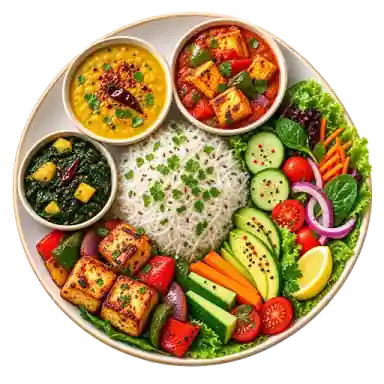
Rotate dal, beans, soy foods, dairy and other suitable protein sources.
Pair cereal-based dishes with protein and vegetables where practical.
Watch portions of fried snacks, sweets and calorie-dense additions.
Choose a routine you can sustain with your household food.
Everyday vegetarian protein options
Dal, rajma, chana, lobia, sprouts, tofu, soy chunks, milk, curd and paneer can all contribute protein. No single ingredient needs to appear at every meal. Rotating sources improves variety and makes it easier to work with regional preferences, budgets and digestion.
Protein quality and quantity differ between foods. Paneer and nuts can be nutrient-dense but also energy-dense, while thin dal may contribute less protein than people expect. The full serving and the rest of the day matter, so avoid judging a meal from the ingredient name alone.
Balanced vegetarian breakfast ideas
Besan chilla with curd, idli with sambar, vegetable poha with a suitable protein side, moong chilla, oats with milk, or stuffed roti with curd can form practical breakfasts. The aim is not to create a perfect list but to improve the combination you already enjoy.
Tea with biscuits alone is easy but often leaves a long nutritional gap. If mornings are rushed, plan one or two repeatable breakfasts and prepare ingredients ahead. Consistency is usually more valuable than an elaborate recipe that you make once.
Lunch and dinner with familiar Indian food
A practical lunch might combine dal or beans, seasonal sabzi, salad or another vegetable, and a suitable portion of roti or rice. Dinner can use a similar pattern with vegetable khichdi and curd, roti with paneer and sabzi, dosa with sambar, or tofu with vegetables according to preference.
The balance across the day matters more than forcing dinner to be carb-free. If you repeatedly arrive at dinner extremely hungry, review breakfast, lunch and the evening snack rather than applying a stricter night-time rule.
FROM GUIDANCE TO A DAILY PLAN
Get 28 days of meals matched to your choices.
₹499 once · PDF on WhatsApp · No subscription
Common vegetarian planning gaps
Vegetarian does not automatically mean high-fibre, high-protein or low-calorie. Fried snacks, sweets, sugary drinks, oversized cereal portions and frequent restaurant meals can still make progress difficult. Another common gap is repeating mostly cereal-based meals while protein remains an afterthought.
People with allergies, kidney disease, diabetes, pregnancy, breastfeeding, a history of disordered eating or other clinical needs should seek individualized guidance. A general online plan cannot replace assessment by an appropriately qualified professional.
A practical vegetarian day
One example could use moong chilla with curd for breakfast, rajma with rice and salad for lunch, roasted chana as a snack, and roti with tofu or paneer and vegetables for dinner. Another might use idli with sambar, a dal-and-sabzi lunch, fruit with curd, and vegetable khichdi. Variety can come from rotating the protein and vegetable rather than inventing an entirely new menu every day.
These examples intentionally avoid fixed quantities because needs differ. The same menu may be too much for one person and too little for another. Appetite, activity, body size, health and the preparation method all influence an appropriate serving.
Budget-friendly vegetarian planning
Dal, chana, rajma, lobia, seasonal vegetables, curd and basic cereal staples can support a lower-cost plan. Dried pulses usually cost less than speciality “health” foods and can be batch-cooked. Soy chunks may be another affordable option for people who tolerate and enjoy them.
Build a short shopping list from meals you already cook. Buy seasonal produce, keep one shelf-stable pulse ready and plan how leftovers will be used safely. Expensive granola, protein bars, imported fruit and plant-based imitation products are optional, not requirements for a balanced vegetarian diet.
Iron, vitamin B12 and other considerations
A varied vegetarian pattern can provide many nutrients, but iron, vitamin B12, calcium, vitamin D and omega-3 intake may deserve attention depending on food choices and health. Tea or coffee with meals can affect iron absorption, while including vitamin-C-rich foods with plant sources may help. These are general principles, not a diagnosis of deficiency.
Do not start high-dose supplements because a social post labels them essential. Symptoms and nutrient status should be assessed appropriately, and supplement type and dose should be discussed with a qualified professional. Food planning and medical treatment serve different purposes.
QUICK ANSWERS
Questions about this guide
Can paneer be part of a weight-loss diet?
Yes, when the portion and preparation fit the rest of the meal and your individual needs.
Are vegetarian diets always low in protein?
No, but protein needs deliberate planning and variety. Dal, beans, soy foods and dairy can contribute.
Do I need protein powder?
Not automatically. Many people can use food sources, while individual needs and clinical situations should be discussed with a qualified professional.